
A blocked outside drain is one of the most common call-outs professional drain companies attend, and plenty of homeowners reach for a set of drain rods first. Used carefully, rods can clear a simple blockage. Used inappropriately, they can push the problem further down the line or damage the pipe. Here's how to do it safely, and how to tell when the job needs a professional.
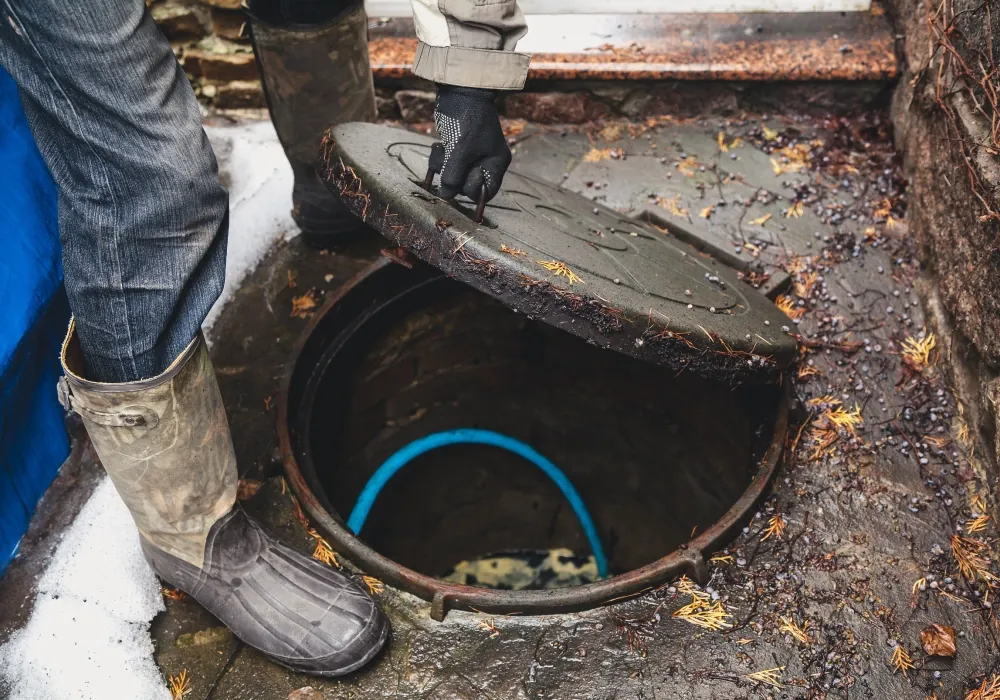
Before you start, you'll need a set of drain rods with a plunger or corkscrew head, heavy-duty gloves, eye protection and old clothes. Keep children and pets away, and never mix rodding with chemical drain cleaners.
Find the blockage! You may be trying to find out how to unblock an external drain, in which case, lift your inspection chamber covers, starting nearest the building. A chamber full of standing water sits upstream of the blockage; the next empty chamber further along is downstream. The blockage is in the pipe between them.
- Screw the plunger head onto the first rod and feed it into the outgoing pipe at the bottom of the full chamber.
- Add rods one at a time, pushing gently along the pipe.
- Only ever turn the rods clockwise. Turning them anticlockwise can unscrew the joints and leave a rod stuck in your drain.
- When you meet resistance, push and pull in short strokes rather than forcing it.
- When the water level drops, flush the drain with a hose or a few buckets of water to clear the remaining debris.
- Rinse and disinfect the rods afterwards, and wash your hands thoroughly.
Rodding has real limits. Stop and call a drain rodding company if:
- The rods won't get past the blockage after a few attempts, or one gets stuck
- The drain clears but blocks again within days or weeks
- The rod head comes back with roots, soil or broken pipe material
- There's sewage in your garden or a persistent smell
- The blockage is beyond your property boundary. Lateral drains and public sewers are usually the water company's responsibility, as explained in our post on drains, lateral drains and sewers.
Recurring blockages usually point to a deeper fault, such as a cracked or displaced pipe, root ingress or a build-up of fat and scale. Forcing rods through older clay pipes can make a crack worse.
What a professional does differently
The best drain unblockers carry out tests such as CCTV drainage surveys to see exactly what's causing the blockage and where it is. Most blockages are then cleared with jetting, which scours the pipe walls clean rather than just punching a hole through the blockage. If the camera finds damage to the pipe, professionals like Grey-Water Drainage Solutions will quote for repairs so the problem doesn't keep coming back.